Cruising With Kids: Ages, Kids Clubs, Cabins and Costs
7 min read Updated September 29, 2026
Good to know
- Minimum age is 6 months on most major lines, 12 months on longer ocean itineraries.
- MSC requires children to be at least 2 on sailings of 11 nights or more.
- Daytime kids clubs are included; nurseries and late-night care cost extra.
- Most kids clubs start at age 3 and require toilet training.
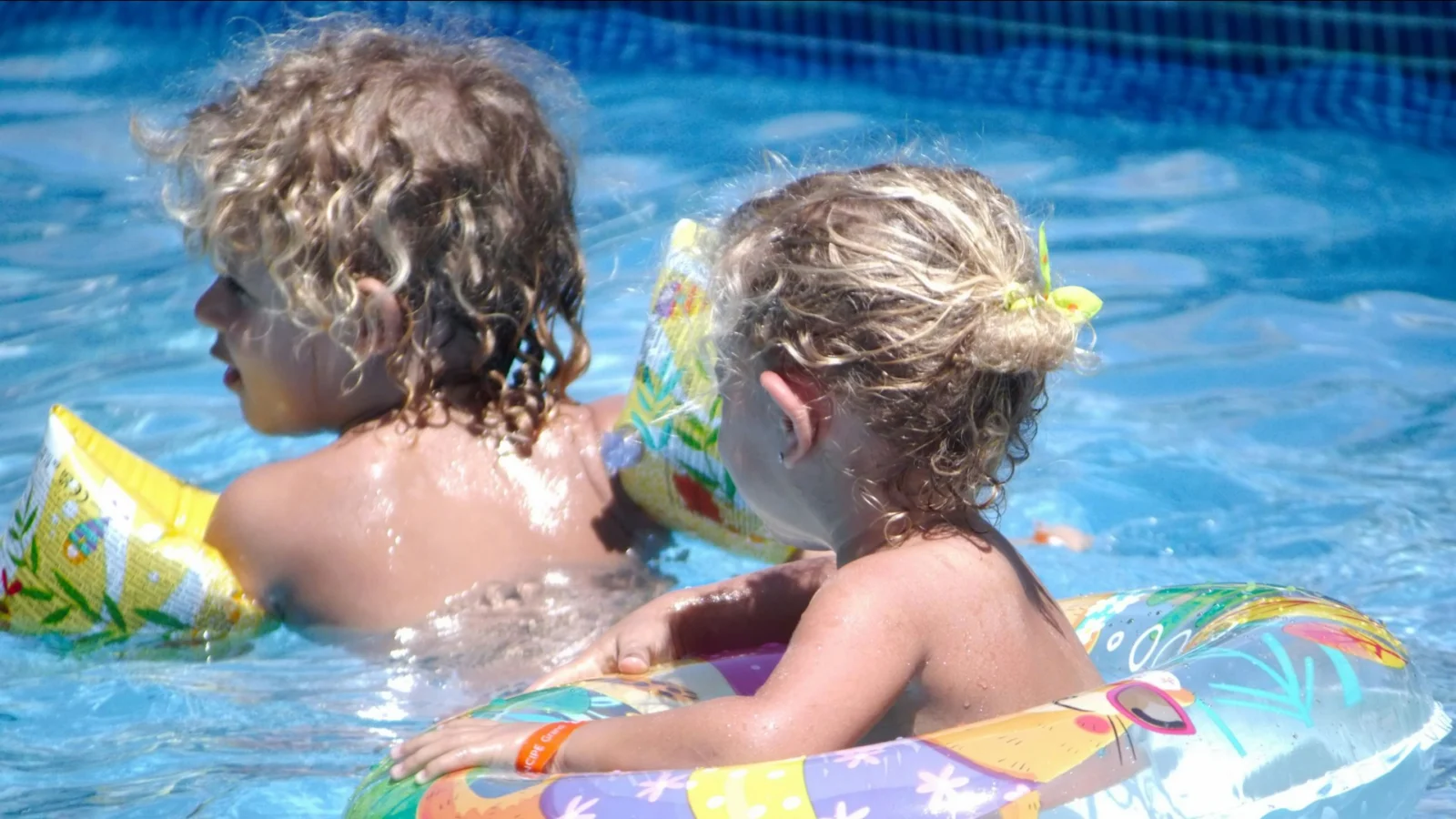
- Children in diapers are banned from regular ship pools on every major line.
- Children pay taxes and port fees even on kids sail free deals.
In this answer
Cruising with kids works well because the things families spend most on ashore, such as meals, entertainment, pools and childcare, are largely included. Most big lines accept babies from 6 months old, and daytime kids clubs are free, typically from age 3. Children usually pay a reduced fare as the third or fourth guest in a cabin, but they still pay taxes, port fees and, on most lines, daily gratuities.
The sweet spot is roughly ages 3 to 12, when children can use the kids clubs and most pools. Babies and toddlers can cruise too, but more of the ship is closed to them, and the rules on age, diapers and nurseries differ by line.
Minimum ages for babies by cruise line
Every major line has a minimum age on the first day of the cruise, and a higher minimum for longer ocean voyages where the ship could be days from a hospital.
| Line | Minimum age | 12 months or older required for |
|---|---|---|
| Royal Caribbean | 6 months | Transatlantic, transpacific, Hawaii, select South America, and cruises with 3 or more consecutive sea days |
| Celebrity | 6 months | Same as Royal Caribbean |
| Carnival | 6 months | Trans-ocean or remote itineraries with more than 2 consecutive sea days |
| Norwegian | 6 months | Cruises with 3 or more consecutive sea days |
| Princess | 6 months | Transatlantic crossings and remote itineraries |
| Holland America | 6 months | Transoceanic, South America, Asia, South Pacific and Hawaii |
| Disney | 6 months | Transatlantic, South Pacific, Hawaii and Panama Canal repositioning |
| MSC | Varies | At least 2 years old on sailings of 11 nights or more |
Sources: Royal Caribbean’s age policy, Carnival’s infant policy, Disney’s minimum age FAQ and the other lines’ published policies. MSC’s rule, introduced in 2025, is the strictest; it makes an exception for shorter cruises booked back to back that return to the home port.
Most Caribbean, Bahamas, Mexico and Alaska cruises of a week or less fall under the 6-month rule. Check your exact itinerary if it includes several sea days in a row.
Kids clubs: ages, costs and the potty-training rule
Supervised kids clubs are one of the best-value parts of a family cruise. Daytime sessions are included in the fare, and children are split into age groups with their own activities.
| Line | Kids club (included) | Teens | Under-3s |
|---|---|---|---|
| Royal Caribbean | Adventure Ocean, ages 3 to 11 | Teen club, ages vary by ship | Royal Babies & Tots nursery, 6 to 36 months, about $9 to $12 an hour |
| Carnival | Camp Ocean, ages 2 to 11 | Circle “C” 12 to 14, Club O2 15 to 17 | Turtles, 6 months to 1 year, extra cost |
| Norwegian | Splash Academy, ages 3 to 12 | Entourage, 13 to 17 | Guppies parent-and-child sessions, 6 months to under 4 |
| Disney | Oceaneer Club and Lab, ages 3 to 10 | Edge 11 to 14, Vibe 14 to 17 | “it’s a small world” nursery, 6 months to 3 years, extra cost |
| Princess | The Treehouse 3 to 7, The Lodge 8 to 12 | The Beach House, 13 to 17 | No nursery |
| Celebrity | Camp at Sea, ages 3 to 12 | Teen club, 13 to 17 | No nursery |
| MSC | Mini 3 to 6, Juniors 7 to 11 | Young 12 to 14, Teens 15 to 17 | Baby Club, 0 to 3, with parents |
Two rules catch families out:
- Toilet training. Norwegian, Disney, Princess and Celebrity require children in the main kids clubs to be fully toilet trained. Carnival is the exception among the big lines: Camp Ocean starts at age 2, and Carnival’s help pages indicate that children still in diapers can join, with parents supplying the diapers.
- Night-time care costs extra. Princess charges $5 per child per hour for its late-night group sitting from 10 p.m. Norwegian charges $6 per hour, and $4 for each extra sibling. Carnival’s Night Owls runs until 1 a.m. at an extra cost.
Club age bands are applied strictly, so siblings of different ages usually end up in different groups. Ask at registration if that is a problem for a younger child.
Babies and toddlers: diapers, pools and supplies
Cruising with a baby or toddler is very doable, but plan around three limits.
Pools. Children in diapers or swim diapers are not allowed in regular ship pools or hot tubs. Celebrity cites US public health rules for this, and the lines apply it firmly. Royal Caribbean offers Baby Splash areas for children who are not fully toilet trained on some of its ships. Disney allows swim diapers only in designated water play areas, for children up to age 4. Carnival, Princess and Celebrity do not allow them in any pool.
Supplies. Carnival does not supply diapers, baby food or formula. Disney sells diapers in its onboard shops, and other lines stock limited basics at ship prices. Bring enough for the whole cruise plus a few extra days, in case of delays.
Cabins. Cribs are generally available on request but need booking in advance. A balcony door needs constant attention with a toddler, which is one reason some families prefer an ocean view cabin, whose window does not open. The trade-offs are in inside, ocean view or balcony.
Pack the baby essentials in your carry-on on embarkation day, since checked bags may not arrive until the evening. Our cruise packing list covers what goes in that bag.
Cabins for families
Most standard cabins sleep two, with some sleeping three or four using sofa beds or pull-down bunks. For a family of four or more, the options are:
- A quad cabin. The cheapest, and the tightest. Workable for a week with small children.
- Connecting cabins. Two cabins with an internal door, often one for parents and one for children. Usually the most comfortable choice, and scarce, so book early. The cabin location guide explains how to spot them on a deck plan.
- Family staterooms. Some ships have larger cabins designed for five or six. Holland America’s Rotterdam, Nieuw Statendam and Koningsdam, for example, have family staterooms that sleep five with two bathrooms.
- Family suites. The largest and most expensive, with separate bedrooms on some newer ships.
Family cabins, connecting cabins and suites are the first to sell out on school-holiday sailings. If your dates are fixed by the school calendar, book 12 months or more ahead, as explained in the best time to book a cruise.
What kids cost on a cruise
Children in the same cabin as two full-fare adults usually get a much lower fare. Norwegian offers significantly discounted rates for the third to eighth guests, and Carnival discounts guests beyond the first two. Royal Caribbean and MSC run “kids sail free” promotions on select sailings, for children 12 and under on Royal Caribbean and 17 and under on MSC.
“Free” covers the cruise fare only. Children still pay:
- Taxes, fees and port expenses, charged per person. On a seven-night Caribbean cruise these are typically $100 to $250 per child. Our guide to cruise port fees and taxes explains why.
- Gratuities. Royal Caribbean charges its $18.50 daily rate for every guest. Carnival charges from age 2 and Norwegian from age 3. The gratuities guide covers the rest.
- Drinks. Soda is extra on most lines. Carnival’s Bottomless Bubbles soda package is $8.34 a day for children, and some lines require every guest in the cabin to buy the same drinks package. See are cruise drink packages worth it.
- Excursions, usually at a reduced child price.
Disney is the main exception on drinks, since it includes soft drinks at meals and drink stations. For a full family budget, see how much a cruise really costs.
Choosing a ship for your children’s ages
The ship matters more than the line for most families. A few patterns hold across the fleet:
- Ages 3 to 10. Look for a ship with a water play area, a large kids club and family shows. Disney’s character entertainment and Carnival’s water parks suit this age well, and so do Royal Caribbean’s biggest ships.
- Ages 10 to 14. Water slides, climbing walls, surf simulators and sports courts matter most. Some attractions, such as go-kart tracks and laser tag on newer Norwegian ships, carry an extra charge.
- Teens. A dedicated teen lounge and a crowd of other teenagers make the trip. Big ships on school-holiday sailings have the most.
- Babies and toddlers. Prioritize a nursery, if you want one, and a splash area for children in swim diapers. Many ships have neither.
Older and smaller ships are cheaper and can suit families with younger children well, but check the kids club facilities and pool rules for the exact ship before booking.
Documents, teens and other rules
Documents. On a closed-loop cruise from a US port, US citizen children under 16 need only a birth certificate. If one parent is traveling alone with the children, carry a signed, notarized consent letter from the other parent, and Royal Caribbean requires a notarized form for minors sailing without a parent or guardian. Details are in do you need a passport for a cruise.
Drinking age. On sailings from North America the drinking age is 21 on Royal Caribbean, Carnival and Norwegian. Royal Caribbean and Princess lower it to 18 on some sailings in Europe, South America and Australia.
Seasickness. Children aged 7 to 12 are the most prone to motion sickness, according to the CDC, and some adult medicines are not suitable for them. Our cruise seasickness guide covers what helps.
For a first family cruise, pick a ship with a water park or splash area and a short itinerary, and register the children for the kids club early on the first day. The first cruise tips guide covers the rest of embarkation day.
People also ask
How old does a baby have to be to go on a cruise?
At least 6 months old on the first day of the cruise on Royal Caribbean, Carnival, Norwegian, Princess, Disney, Celebrity and Holland America. The minimum rises to 12 months on transatlantic and transpacific crossings, Hawaii and other itineraries with several consecutive sea days, with the exact rule varying by line. MSC requires children to be at least 2 on sailings of 11 nights or more.
Are kids clubs free on cruise ships?
Yes, daytime kids clubs are included in the fare on all the major family lines, including Royal Caribbean's Adventure Ocean, Carnival's Camp Ocean, Norwegian's Splash Academy, Disney's Oceaneer Club and Princess's youth centers. Fees apply to late-night group babysitting, for example $5 per child per hour on Princess and $6 on Norwegian, and to nurseries for babies and toddlers, which Royal Caribbean prices at about $9 to $12 an hour.
Can toddlers in diapers go in the pool on a cruise?
Not in the main pools. US public health rules, which the lines follow, keep children in diapers or swim diapers out of regular pools and hot tubs. Royal Caribbean has Baby Splash areas for them on some ships, and Disney allows swim diapers in designated water play areas for children up to age 4. Carnival, Princess and Celebrity do not allow diapers or swim diapers in any pool.
Do kids pay gratuities on cruises?
On most lines, yes. Royal Caribbean charges the standard $18.50 per person per day for every guest. Carnival charges from age 2, at $17 a day, and Norwegian from age 3, at $20 a day. For a family of four on a seven-night cruise, that means gratuities of roughly $475 to $560. Budget them alongside the children's fares, taxes and port fees.
Is a cruise a good vacation with kids?
For many families, yes, because meals, entertainment, pools and supervised kids clubs are all included and you unpack once. It works best with children aged about 3 to 12, who can use the free clubs, and on ships with water parks or family entertainment. Babies and toddlers are harder, since clubs and pools often exclude them, and teens enjoy it most on ships with dedicated teen spaces.
Keep reading
More straight answers
Planning a Cruise
Cruise Travel Insurance: What It Covers and Whether You Need It
Cruise travel insurance reimburses non-refundable costs if you cancel or cut the trip short for a covered reason, and pays for medical care and emergency evacuation while you are away. It usually costs 5 to 10 percent of the trip price. It matters on cruises because Medicare and most US health plans rarely pay for care abroad, onboard medical bills are charged to you, and evacuation can cost tens of thousands of dollars.
Planning a Cruise
Do You Need a Passport for a Cruise? Closed-Loop Rules for US Citizens
US citizens on a closed-loop cruise, one that starts and ends at the same US port and visits Canada, Mexico, the Caribbean or Bermuda, can legally re-enter with a birth certificate and government-issued photo ID instead of a passport. You do need a passport book for one-way cruises, some ports such as Panama, Colombia and Martinique, and any flight home from a foreign country.

Planning a Cruise
The Best Time to Book a Cruise: Wave Season, Early Booking and Last-Minute Deals
For most people, the best time to book a cruise is 9 to 18 months before sailing, when choice of cabins is widest and early fares are competitive, ideally during wave season from January to March, when lines run their biggest promotions. Last-minute deals appear after the final payment deadline, usually 75 to 120 days before sailing, but mostly on Caribbean and short cruises, and cabin choice is limited.