Can You Bring a Dog on a Cruise? Pet Rules, Service Dogs and the Queen Mary 2 Kennels
By the Cruise Talk editors 8 min read Updated November 8, 2026
Good to know
- Mainstream cruise lines do not allow pets on board, only trained service dogs.
- Emotional support animals are refused by Royal Caribbean, Carnival and Norwegian.
- Cunard's Queen Mary 2 has 24 kennels on selected transatlantic crossings.
- QM2 kennels were priced at $1,300 upper and $1,500 lower for 2026.
- Pets on QM2 stay in the kennels, never in cabins or public areas.
- Service dogs need vaccination records, and many ports require their own permits.
- A dog re-entering the US needs a CDC Dog Import Form receipt.
In this answer
No, you cannot bring a pet dog on a mainstream cruise. Royal Caribbean, Carnival, Norwegian, Princess, Celebrity and the other big lines accept only trained service dogs for guests with disabilities, and they turn away emotional support animals. If you want your dog with you at sea, there is one real option: Cunard’s Queen Mary 2, which carries dogs and cats in 24 kennels on selected transatlantic crossings between New York and Southampton, England.
So the honest answers to “cruise with dogs allowed” are short. For a Caribbean, Alaska or Mexico cruise, your dog stays home unless it is a working service dog. For a crossing of the Atlantic, Queen Mary 2 is the only ship of a major line built for it, and its kennels sell out far ahead.
Which cruise lines allow dogs?
| Cruise line | Pet dogs | Service dogs | Emotional support animals |
|---|---|---|---|
| Cunard (Queen Mary 2 only) | Yes, in onboard kennels on selected transatlantic crossings | Yes, approved through the Access Office; not in the kennels | Not accepted as service animals |
| Royal Caribbean | No | Yes | No, since 2018 |
| Carnival | No | Yes, working service dogs at least 6 months old | No |
| Norwegian | No | Yes, booked at least two weeks ahead | No |
Princess, Celebrity, MSC, Disney and the others follow the same basic pattern as the first three big lines: service dogs yes, pets no. Cunard’s North American passage contract says it too: no pets or other animals on its ships at any time, with the exception of pets approved for the Queen Mary 2 kennels. Cunard’s other ships, Queen Victoria, Queen Anne and Queen Elizabeth, do not carry pets.
Queen Mary 2 kennels: how cruising with a pet works
Queen Mary 2 has 24 kennels on Deck 12, 12 upper and 12 lower, looked after by a dedicated Kennel Master. Cunard takes only cats and dogs, and only on selected transatlantic crossings. Cunard describes them as the only kennels at sea. There is space for pets to play, a walking area on deck and a lounge for owners, and the kennel area is fitted with a lamppost that once stood outside Cunard’s former headquarters in Liverpool and a New York fire hydrant.
The rules owners need to know before booking:
- Size: upper kennels suit pets of 25 pounds or less, lower kennels heavier pets. The maximum length is 34 inches per kennel, nose to tail, and the maximum height is 27 inches. A longer pet can book two joined kennels, each paid separately. Very large breeds such as Great Danes, Mastiffs and Greyhounds cannot be accommodated.
- Banned breeds: dogs prohibited under the UK Pet Travel Scheme, including the XL Bully and Pit Bull Terrier, are not allowed.
- Paperwork: every pet needs a pet passport or a UK Animal Health Certificate, plus whatever the destination country requires on arrival.
- Where the pet stays: in the kennels for the whole crossing. Pets are not allowed in cabins or in any public area, and only guests sailing with a pet can enter the kennel area.
- Food and care: Cunard supplies food from an approved list, or you can bring your own if no listed brand suits. There are no veterinary services on board.
- Extras: the kennel package has included items such as food and water bowls, a dog coat, a fleece blanket and a portrait taken on board. Ask the kennel team about visiting times, which are set on board.
Pricing for 2026 crossings was reported at $1,300 for an upper kennel and $1,500 for a lower kennel, up from earlier rates of about $800 and $1,000. That is in addition to your own fare, since you must hold a cruise booking before Cunard will reserve a kennel. A cat usually takes two kennels, one of them for a litter tray, which roughly doubles the cost. Prices are set by Cunard and can change, so confirm the current rate with the line’s kennel team when you book.
The crossing itself is seven nights of nonstop sailing. If a one-way voyage appeals, our sister site explains how one-way repositioning cruises work, though Queen Mary 2’s crossings are a scheduled liner service rather than a seasonal repositioning.
Why kennel spots on Queen Mary 2 are hard to get
With only 24 kennels per crossing, demand is far higher than supply. Many of the people who use them are moving between the US and the UK or Europe and want to avoid putting a pet in an aircraft hold. Kennel bookings open well in advance, commonly reported as up to two years ahead, and popular summer crossings fill fast. If you are planning a move, decide on the sailing date and request the kennel as early as Cunard allows, then build the rest of the move around it.
Book the cruise and the kennel together, and check the line’s cancellation terms for both. A sick pet or a missing document can stop the animal from boarding, so this is a trip where cruise travel insurance and reading the fine print about what it covers matter. The usual advice about when to book a cruise does not apply here: waiting for a deal means losing the kennel.
Service dogs on a cruise: what the lines require
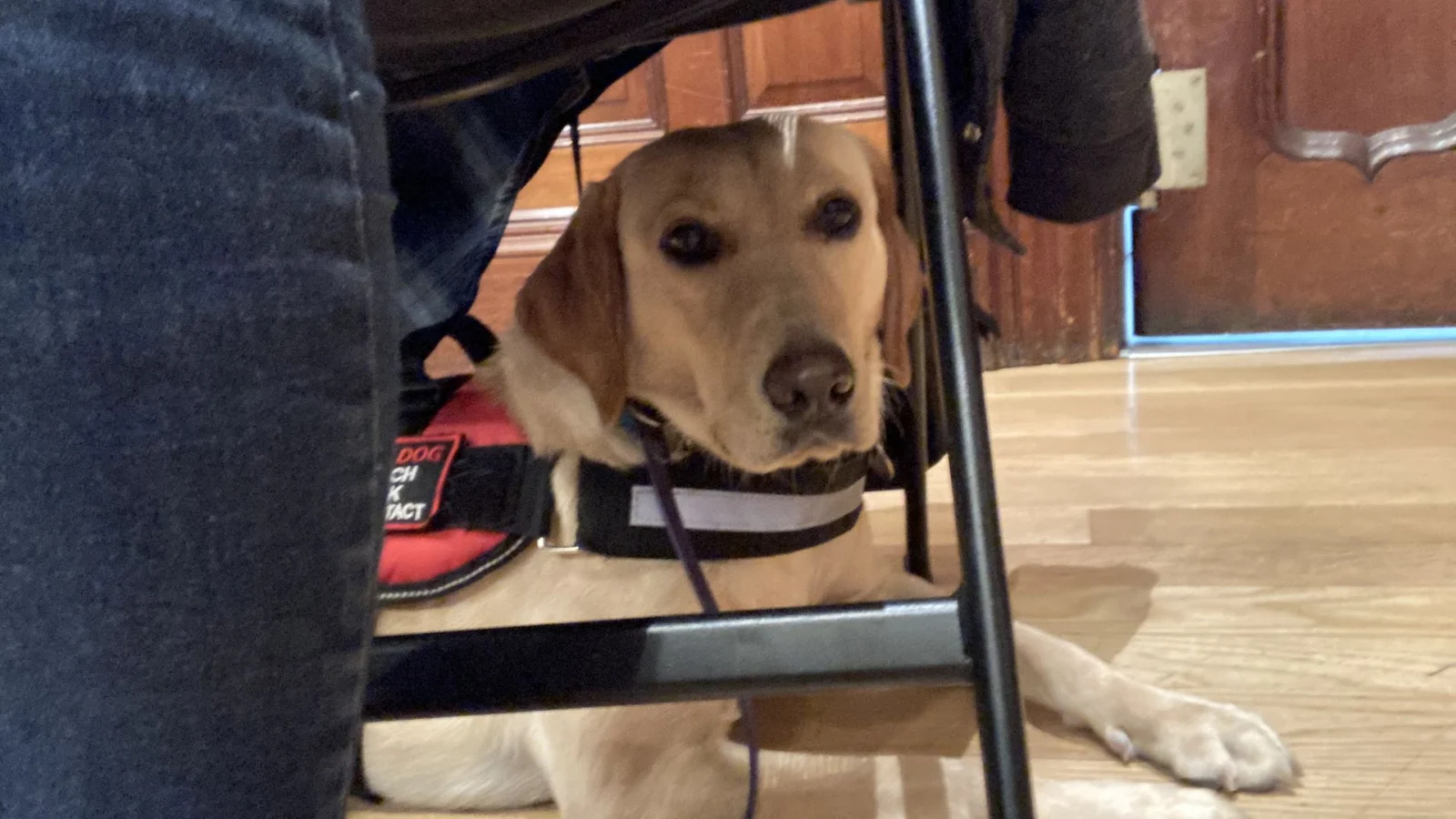
All the big lines accept service dogs, but each one has a process, and a dog that arrives without the right documents can be refused at the terminal. The lines use the Americans with Disabilities Act definition, which covers a dog individually trained to do work or perform tasks for a person with a disability. The ADA also says a service dog does not need to be certified or registered. What the cruise lines mostly care about is health paperwork and port rules.
Royal Caribbean asks you to tell its Access Department when you book. Evidence that the dog is a service dog is helpful but not required. If you need a relief area or refrigerated food storage, request it no later than 30 days before sailing. Guests with a non-dog animal that assists with a disability must give at least 60 days’ notice.
Carnival permits only working service dogs, at least 6 months old, microchipped with an ISO-compatible chip and up to date on vaccines. You submit its service animal form no later than 30 days before sailing, then email a current vaccination record showing the rabies vaccine and microchip number, plus a CDC Dog Import Form receipt, at least a week before. Originals travel in your hand luggage, not your suitcase. If the itinerary includes Grand Turk, you need an import license from the Turks and Caicos government even if the dog stays on board, and that territory issues no licenses for restricted breeds.
Norwegian asks you to book at least two weeks ahead so it can check each port, and wants current vaccination records including rabies, plus a USDA or international health certificate. You bring all food, medication and a life jacket for the dog. Norwegian notes that not every port lets service animals ashore, naming Iceland and Jamaica as places with specific restrictions.
Cunard handles service dogs through its Access Office and asks for requests at least 60 days before sailing. Service dogs do not use the Queen Mary 2 kennels.
Life on board with a service dog
The onboard rules are similar across lines. The dog stays leashed or harnessed in public areas, including the dining rooms, but cannot go into pools, whirlpools, saunas or the spa. You feed it in your cabin, not in a restaurant. The dog cannot be left alone in the cabin, and crew are not there to look after it. Owners are responsible for any damage, and Royal Caribbean may charge a cleaning fee.
Each ship sets up a relief area. Royal Caribbean uses a 4 by 4 foot area of cypress mulch shared by all service dogs on the sailing, and points out that the Central Park area on its Oasis class ships is not a relief area. Carnival sets one up in a non-guest area and will use a specific material if you ask ahead. Norwegian provides a relief box. Dogs are not allowed to relieve themselves anywhere else.
Pack more than you think you need. Food, any medication, waste bags, cleaning supplies and the dog’s paperwork all count, and there is no pet store at sea. Our cruise packing list covers the human side, and the best cabin location guide helps if you want a cabin close to an elevator and the deck where the relief area sits.
Ports of call and coming back into the US
Permission to board the ship is not permission to go ashore. Carnival says this directly, and every line puts the responsibility for port permits on the owner. Some islands need an import permit or health certificate issued in advance, some accept only annual rabies vaccinations and not three-year shots, and Carnival notes that Mexican ports require parasite treatment no more than 15 days before arrival, recorded on the health certificate. The USDA’s pet travel pages and your veterinarian are the places to check each country.
Coming home, a dog entering the United States needs a CDC Dog Import Form receipt, which is free and can be filled in online. What else the dog needs depends on where it has been during the previous six months. For dogs that were only in rabies-free or low-risk countries, the receipt is enough. Dogs that have been in a country the CDC lists as high risk for dog rabies need extra documents, including a rabies vaccination certification completed by a USDA-accredited veterinarian before leaving the US. Check the CDC’s country list against your itinerary well before sailing, because the high-risk paperwork cannot be arranged at the pier.
The same goes for your own documents. A passport for your cruise is optional on many closed-loop sailings, but for a service dog the paperwork is never optional. Start the process with the cruise line’s access team the day you book, and keep copies of every document on your phone and on paper, because the dog’s day ashore depends on them.
People also ask
Are there any cruises that allow dogs?
Among major cruise lines, only Cunard carries pets, and only on Queen Mary 2's selected transatlantic crossings between New York and Southampton. Dogs and cats travel in 24 supervised kennels on Deck 12 and cannot go into cabins or public areas. Every other mainstream line, including Royal Caribbean, Carnival, Norwegian, Princess and Celebrity, accepts only trained service dogs for guests with disabilities.
Can I bring my emotional support dog on a cruise?
No, not on the big lines. Royal Caribbean, Carnival and Norwegian all say they do not accept emotional support dogs, and Royal Caribbean stopped carrying them in 2018. The lines follow the ADA definition, which covers dogs individually trained to perform a task for a person with a disability. A dog whose only role is comfort does not qualify, even with a letter or registration.
How much does it cost to take a dog on the Queen Mary 2?
For 2026 crossings, Cunard's kennel rates were reported at $1,300 for an upper kennel, for pets up to 25 pounds, and $1,500 for a lower kennel for heavier pets, on top of your own cruise fare. A pet longer than 34 inches needs two kennels, each charged separately, and cats usually use two, one for a litter tray. Prices can change, so confirm with Cunard's kennel team.
Do service dogs need paperwork to go on a cruise?
Yes, in practice. Royal Caribbean says proof that a dog is a service dog is helpful but not required, but every line needs vaccination records, and Carnival asks for a CDC Dog Import Form receipt and a microchip number. Many ports of call require their own health certificates or import permits before a dog can go ashore, and a few, such as Grand Turk on Carnival, need a permit even if the dog stays on board.
Where do service dogs go to the bathroom on a cruise ship?
The ship sets up a relief area for them. On Royal Caribbean it is a 4 by 4 foot box of cypress mulch, shared by any service dogs on board, and you must request it at least 30 days before sailing. Carnival places its relief area in a non-guest area and lets you ask for a specific material. Norwegian provides a relief box. Dogs may not relieve themselves anywhere else on the ship.
Keep reading
More straight answers
Planning a Cruise
Cruise Port Parking: What It Costs at Galveston, Port Canaveral, Miami and Other US Ports
Official cruise port parking at the major US home ports costs about $20 to $35 per day as of 2026, so a seven-night cruise usually runs $150 to $280 in parking. Port Canaveral charges $20 a day plus tax, PortMiami $28 to $35, Port Everglades and New Orleans $25, and Galveston prices by lot through its online reservation system. Private off-site lots with shuttles are often cheaper.
Planning a Cruise
Do You Need a Passport for a Cruise? Closed-Loop Rules for US Citizens
US citizens on a closed-loop cruise, one that starts and ends at the same US port and visits Canada, Mexico, the Caribbean or Bermuda, can legally re-enter with a birth certificate and government-issued photo ID instead of a passport. You do need a passport book for one-way cruises, some ports such as Panama, Colombia and Martinique, and any flight home from a foreign country.
Planning a Cruise
Cruise Travel Insurance: What It Covers and Whether You Need It
Cruise travel insurance reimburses non-refundable costs if you cancel or cut the trip short for a covered reason, and pays for medical care and emergency evacuation while you are away. It usually costs 5 to 10 percent of the trip price. It matters on cruises because Medicare and most US health plans rarely pay for care abroad, onboard medical bills are charged to you, and evacuation can cost tens of thousands of dollars.