Cruise Approved Power Strips and Cabin Outlets: What Each Line Allows
By the Cruise Talk editors 8 min read Updated October 13, 2026
Good to know
- Surge protectors are banned on Carnival, Princess and Royal Caribbean.
- Royal Caribbean bans all power strips, extension cords and multi-plug outlets.
- Carnival allows power strips and extension cords without surge protection.
- Most cabins have one US 110-volt and one European 220-volt outlet at the desk.
- "Cruise approved" is a seller's label, not a cruise line certification.
- CPAP users can get an extension cord from most lines; ask ahead.
In this answer
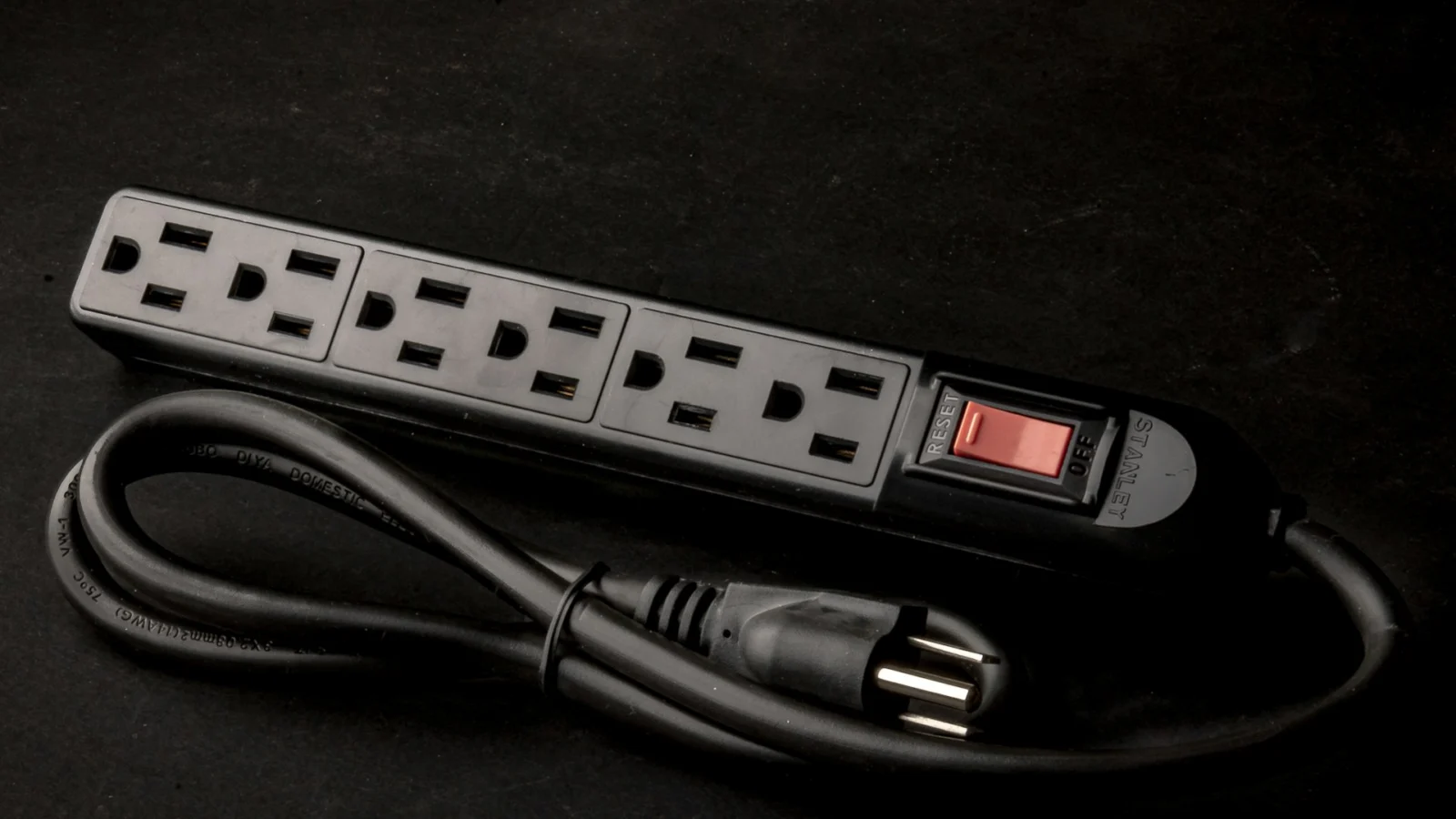
A “cruise approved” power strip is one without surge protection. It is not an official rating: no cruise line tests or approves products, and the label only means the seller believes it meets the most common rule, which bans surge protectors. Carnival and Princess allow non-surge power strips. Royal Caribbean bans every power strip, extension cord and multi-plug outlet, surge-protected or not, and Celebrity bans extension cords and multi-plug adapters.
The reason people want one is simple. A typical cruise cabin has just one US outlet and one European outlet at the desk, and two people with phones, watches, a tablet, a camera and a CPAP machine quickly run out of sockets. Below is what cabins actually have, why surge protectors are off limits, each major line’s rule and what to pack instead.
What outlets a cruise cabin has
Most ships built for the North American market supply both 110-volt and 220-volt power in cabins. The usual setup is one North American three-prong outlet and one European round-pin outlet at the desk, plus a socket in the bathroom that is only for electric shavers.
| Line | What the line says about cabin outlets |
|---|---|
| Carnival | One 110-volt North American outlet and one 220-volt European (German-style) outlet at the desk; three desk outlets on Mardi Gras, Carnival Celebration, Carnival Jubilee and Carnival Festivale; USB-A ports in cabins on most ships |
| Princess | A standard US 110-volt outlet at the desk on every ship; a 220-volt outlet on every ship, though how easy it is to reach varies on older ships; USB-C ports only on Sun Princess |
| Celebrity | Dual-voltage 110/220 AC outlets |
| Norwegian | 110-volt and partly 220-volt power |
| MSC | 110/220-volt power; outlets take both US-style and Northern European-style plugs; adapters available from the Information Office |
| Royal Caribbean | 110/220-volt power, with North American and European outlets |
Two practical points follow. First, the European outlet is useful only if your plug fits it and the device handles 220 volts. Most phone, laptop and camera chargers are labeled “100-240V” and work on either outlet with a simple plug adapter; a device labeled 110 or 120 volts only must stay on the US outlet. Second, the bathroom socket is for shavers and toothbrushes, not hair tools. Most cabins come with a hair dryer, so leave yours at home unless you really need it.
Newer and recently refurbished ships usually have more outlets and USB ports than older ones, and suites have more than inside cabins. If outlets matter a lot to you, the deck plans and cabin descriptions for your specific ship are the place to check, along with the advice on which cruise cabin to book.
Why surge protectors are banned on ships
The lines’ own pages mostly just say “for safety reasons”. The clearest official explanation comes from the US Coast Guard. In 2013 it issued Marine Safety Alert 03-13, warning that surge protectors bought for use ashore “may be a fire risk onboard vessels”.
The alert explains that shore-type surge protectors are designed around the way buildings ashore are wired, and a ship’s electrical system is set up differently. When a ground fault occurred on a US-flag container ship, shore-type surge protectors overheated and caused two cabin fires. The alert applies to vessels in general, not cruise ships specifically, but it matches what the cruise lines ban.
This is also why the rule targets surge protection, not the number of outlets. A plain power strip has no surge circuit, so Carnival and Princess allow it. Royal Caribbean and Celebrity go further and ban multi-plug devices altogether, without giving a specific reason.
Power strip and extension cord rules by line
These are the rules on each line’s own pages as of October 2026. Some pages contradict themselves, which is noted below the table.
| Line | Non-surge power strip | Surge protector | Extension cord | USB charging cube |
|---|---|---|---|---|
| Royal Caribbean | Banned | Banned | Banned | Allowed if it carries a recognized US or European certification |
| Carnival | Allowed | Banned | Allowed without surge protection | Allowed |
| Princess | Allowed after inspection | Banned | Allowed after inspection, without surge protection | Not listed as banned |
| Celebrity | Banned (multi-plug adapters) | Banned | Banned | Not listed as banned |
| Norwegian | Not addressed | Not addressed in the prohibited list | Allowed for CPAP, without surge protector | Not listed as banned |
| MSC | Not addressed | Not addressed | Own cords not permitted | Battery chargers allowed |
Royal Caribbean. Its prohibited items policy bans electrical items not designed for personal grooming, naming extension cords, power strips and multi-plug outlets. Device and USB chargers marked with a recognized US or European conformity certification are allowed. This is the strictest of the big lines, and a strip labeled “cruise approved” is still banned here.
Carnival. The prohibited items list puts power strips, multi-outlet adapters and extension cords without surge protection among the items generally permitted, adding that they may be removed if deemed unsafe. Carnival’s CPAP page states plainly that surge protectors are prohibited.
Princess. The pre-cruise FAQ lists electrical devices with surge protectors, including multi-plug outlets and power strips, as prohibited, and says non-surge versions are allowed with caution after inspection and testing by the onboard electrical department. The same page also says extension cords and surge-protected strips are “generally not permitted” and, in a footnote, that surge-protected extension cords are allowed. Read it as: no surge protection, expect an inspection.
Celebrity. The prepare to sail FAQ lists electrical extension cords as prohibited, and Celebrity’s pre-boarding guide adds multi-plug adapters. It does not name power strips separately, but a strip is both of those things, so plan on leaving it at home.
Norwegian. NCL’s prohibited items page does not mention power strips, surge protectors or extension cords. It bans transformers and anything with a heating element. Its accessible cruising page asks CPAP users to bring an extension cord that does not include a surge protector, which is the best guide to how the ship views them.
MSC. MSC’s accessibility and medical page says guests are not permitted to bring their own extension cords for safety reasons, and its general FAQ limits cabin appliances to shavers, hair dryers, battery chargers and computers. It does not mention power strips by name.
The packing list on what is banned beyond electronics, from irons to candles, is in the cruise packing guide.
What a “cruise approved” power strip actually is
Search for cruise power strips and you will find dozens of products labeled “cruise approved” or “cruise ship safe”. The products usually have these features:
- No surge protection circuit, which is the feature that matters
- Two to four AC outlets plus several USB-A or USB-C ports
- A short cord, or none at all, so the unit plugs straight into the wall
- Sometimes a flat or swivel plug so it fits the desk outlet
That makes them legal on Carnival and, after inspection, on Princess. It does not make them legal on Royal Caribbean or Celebrity, and the label carries no weight with security on any line. If a product description says “surge protector” anywhere, or it has a surge indicator light, it is not allowed on the lines that ban surge protection, whatever the box says.
Look for a product that carries a recognized safety mark from a testing laboratory, avoid cheap unmarked strips, and keep the total load low. A strip is for chargers, not for a hair straightener and a kettle at the same time. Kettles, coffee makers with hot plates and irons are banned on most lines anyway.
What to bring instead
The option that works on every line is a wall-plug USB charger with several ports, the kind that plugs directly into the outlet with no cord. With a four- or five-port charger in the US outlet, two people can charge phones, watches and earbuds overnight. Royal Caribbean’s rule expressly allows USB chargers with a US or European certification mark.
Other things that help:
- A European plug adapter. A simple round-pin adapter (Type C) lets you use the 220-volt outlet for dual-voltage chargers. MSC says guests can request adapters from its Information Office, but bringing your own avoids the wait.
- Longer charging cables. The desk outlet is often far from the bed. A 6- to 10-foot USB cable reaches the nightstand without an extension cord.
- A power bank. Useful in port and as a second charging point in the cabin. If you fly to the port, airline rules require it in your carry-on.
- Your cabin’s USB ports. Many newer ships have USB ports at the bed or desk. Carnival says most of its ships have 5-volt USB-A ports in cabins, enough for a phone but slow for a tablet or laptop.
Devices with heavy power needs, such as laptops, are best charged one at a time from the US outlet. If you rely on your phone at sea, the guide to cruise ship Wi-Fi covers what internet packages cost.
CPAP machines and medical devices
CPAP and BiPAP users have the best case for extra cords, and every major line has a process for them. Notify the line well before sailing, usually through its accessibility or special needs form.
| Line | Extension cord for CPAP |
|---|---|
| Royal Caribbean | The line provides an extension cord and distilled water in the cabin; request in advance |
| Carnival | Bring your own extension cord, which Carnival recommends; no surge protector; up to one gallon of distilled water per device, hand-carried |
| Norwegian | Bring an extension cord about 6 feet long without a surge protector; a limited supply is available from Guest Services |
| Celebrity | Notify the line at least 30 days before sailing if you need distilled water and an extension cord |
| Princess | Medical equipment and cords may be checked for electrical safety before use |
| MSC | Complimentary distilled water and extension cords on board; a charge applies if the cord is not returned |
Pack the CPAP in your hand luggage on embarkation day; Carnival requires it to be carried on. If you depend on another powered medical device, such as an oxygen concentrator or a mobility scooter charger, contact the line’s accessibility team before booking, because those come with their own approval steps.
What happens if security finds a banned power strip
Luggage is screened at the terminal before it is delivered to your cabin, and a power strip is easy to spot. Lines state that banned items can be removed, and Carnival says even permitted strips may be removed if deemed unsafe. Royal Caribbean also notes that items not on its list can still be refused. Either way, expect to lose the use of it for the cruise.
The easiest way to avoid that is to check your line’s current page a few weeks before sailing, since these lists change, and pack a wall-plug USB charger plus a plug adapter. For everything else that makes the first day smoother, see the first cruise tips and, for the last morning, the cruise disembarkation tips, which include a reminder to check the outlets for forgotten chargers.
People also ask
Can you bring a power strip on a cruise?
It depends on the line. Carnival allows power strips, multi-outlet adapters and extension cords as long as they have no surge protection. Princess allows non-surge versions after inspection by its electrical department. Royal Caribbean bans power strips, extension cords and multi-plug outlets of any kind, and Celebrity bans extension cords and multi-plug adapters. On any line, a wall-plug USB charger avoids the problem.
Why are surge protectors not allowed on cruise ships?
Surge protectors made for homes are designed for land power systems, where the electrical system is grounded differently. The US Coast Guard warned in a 2013 marine safety alert that these devices may be a fire risk on vessels, after shore-type surge protectors overheated during a ground fault and caused two cabin fires on a US cargo ship. Cruise lines ban them for safety.
What is a cruise approved power strip?
It is a marketing term for a power strip or outlet cube without surge protection, often with several USB ports and a short cord or none. No cruise line certifies or approves any product. Whether it is allowed depends on your line's rules: fine on Carnival, allowed after inspection on Princess, and banned on Royal Caribbean and Celebrity regardless of the label.
How many outlets are in a cruise ship cabin?
Fewer than most people expect. A typical cabin has one North American 110-volt outlet and one European 220-volt outlet at the desk, plus a bathroom socket meant only for shavers. Carnival says its newest ships, such as Mardi Gras and Carnival Celebration, have three desk outlets, and most of its ships have USB-A ports. Newer ships on most lines have more outlets and USB ports.
Can I bring an extension cord for my CPAP on a cruise?
On Carnival and Norwegian, yes, as long as it has no surge protector; Norwegian suggests a cord about 6 feet long. Royal Caribbean, Celebrity and MSC provide an extension cord on request instead, so ask when you notify the line about the device. Celebrity asks for 30 days' notice if you need distilled water and an extension cord.
Keep reading
More straight answers
Cabins & Ships
Which Cruise Cabin Should You Book? Inside, Ocean View, Balcony or Suite
Which cruise cabin to book depends on the itinerary more than your taste. On a port-heavy Caribbean week, an inside or ocean view cabin is the better buy, because you are ashore all day. On Alaska, the fjords, the Panama Canal or any cruise with four or more sea days, a balcony earns its premium, about $380 per person a week over inside on Carnival in 2026. Suites pay off mainly for their perks.
Cabins & Ships
Solo Cruise Single Supplement: Why You Pay Double and How to Avoid It
Cruise fares are priced per person based on two people sharing a cabin, so a solo traveler booking a standard cabin pays a single supplement, often up to 200 percent of the per-person fare, which means paying for both berths. You can avoid it by booking a dedicated solo cabin, such as Norwegian's Studios, Celebrity's single staterooms or Holland America's solo ocean view cabins, or by watching for reduced-supplement promotions.
Cabins & Ships
The Best Cabin Location on a Cruise Ship: Deck, Midship and What to Avoid
The best cabin location on a cruise ship is midship on a low or middle deck, where the ship moves least in a swell; the CDC's advice for motion sickness is to avoid places of maximum motion such as the bow. Then check the deck plan for what is directly above and below your cabin, and avoid sleeping under the pool deck, buffet or jogging track, or above the theater, nightclub or galley.